Air Jordan vs General Nike Kicks: Key Differences Broken Down
Step into any sneaker shop in 2026 and you’ll see Air Jordans next to mainline Nike shoes like the Air Force 1, Air Max, and Dunk — but despite having a corporate parent, these products fill distinctly different categories in terms of aesthetics, price point, cultural relevance, and consumer base. The uncertainty is fair: Jordan Brand functions under the Nike banner, every Air Jordan features Nike Air technology, and both brands use the same production facilities. Yet the contrasts are significant and important to know, especially when deciding where to spend your sneaker budget. Air Jordans come with steep asking prices that can be two times or three times comparable Nike sneakers. This analysis reviews the core contrasts across brand DNA, creative direction, performance tech, pricing, culture, and resale dynamics.
Brand Identity and Corporate Structure
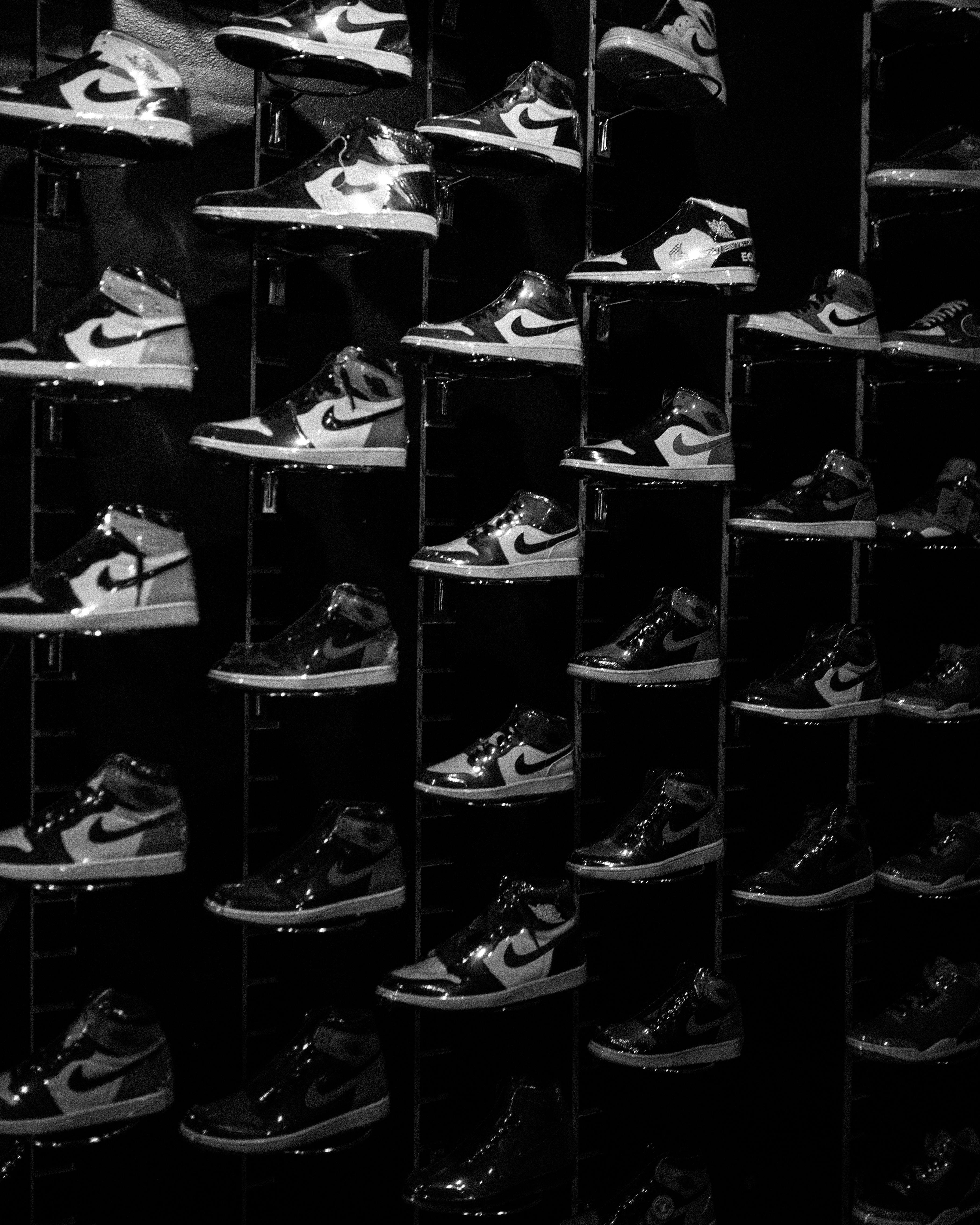
Jordan Brand functions as a division of Nike, Inc., but behaves with considerable self-governance impacting creative output, brand marketing, and distribution channels. Nike secured sole rights to Michael Jordan’s identity in 1984 with a five-year, $2.5 million agreement that has since become a relationship valued at an reported $150 million per year in licensing royalties to Jordan personally. In 1997, Nike formally split the Jordan line into its own company with a distinct design staff, marketing department, and brand CEO — currently Craig Williams, who manages a business that generated approximately $6.6 billion in income during fiscal year 2025. Regular Nike sneakers function under the broader Sportswear and Basketball divisions, splitting assets and brand capital across dozens of product lines from jogging to gym to lifestyle. The Jumpman logo — drawn from a famous photo of Jordan during the 1988 Slam Dunk Contest — is legally separate from the Nike Swoosh and signifies a different brand identity that consumers see as more upscale and luxurious. This business framework means Jordan Brand manages distribution more carefully, capping supply to maintain demand in ways that the wider Nike lineup, with its broad-market approach, generally avoids.
Design Philosophy and Aesthetics
The creative direction behind each brand varies fundamentally in creative origin and design ambition. Every core Air Jordan silhouette was designed to reflect Michael Jordan’s character and passions — the Jordan 9 referenced international design elements, the Jordan 15 from nike jordans shoes sale a military aircraft, the Jordan 33 from space exploration. Nike’s mainline lines favor versatility and universal attraction, producing classic silhouettes like the Air Force 1 and Air Max 90 that are neutral rather than concept-heavy. Jordan Brand has a tighter design staff that creates fewer models but dedicates more time into each, building more distinctive individual identities. Material selections on Jordans tend toward the bold — patent leather, elephant print, carbon fiber — while Nike lifestyle shoes stick to proven fabric choices. Partnership strategies also diverge: Jordan collaborates with high-end labels like Dior and A Ma Maniére, while Nike collaborates more expansively across athletes and artists.
Innovation and On-Court Play
Both brands utilize Nike’s proprietary innovations, but implementation timelines vary. Jordan performance shoes often introduce innovations first — the Jordan 28 introduced a Flight Plate that afterward shaped Nike’s larger product range. Jordan’s court shoes integrates Zoom Air, React foam, and Formula 23 cushioning in distinct configurations. Regular Nike basketball shoes like the LeBron and KD series employ the same foundational tech but are calibrated for different wearers’ movement patterns. For everyday and retroed releases, the divide shrinks — a retro Air Jordan 1 and an Air Force 1 both share fundamental encapsulated Air. Nike’s running arm leads in midsole innovation with ZoomX and Alphafly, systems not found in Jordan offerings since the label doesn’t produce running shoes. The conclusion: for basketball, both brands provide strong innovation, but Jordan directs innovation on a more focused product range.
| Category | Air Jordan | Standard Nike |
|---|---|---|
| Average Retail Price | $180–$250 | $90–$180 |
| Annual Revenue (2025) | ~$6.6 billion | ~$45 billion (total Nike) |
| Supply Model | Restricted, controlled | Broadly available plus limited |
| Primary Logo | Jumpman | Swoosh |
| Typical Resale Premium | 120–400% of retail | 80–150% of retail |
| Core Audience | Collectors and enthusiasts, 18–40 | Broad consumer base, all ages |
| Athletic Categories | Basketball, Lifestyle, Golf | Running, Basketball, Training, Soccer, etc. |
Cost and Worth Analysis
The price disparity is one of the first things customers observe. In 2026, Jordan retros are priced between $180 and $250, while similar Nike lifestyle shoes fall between $110 and $170 — a 40-60% surcharge for the Jordan label. This premium is driven by higher-quality materials, more limited supply, Jordan branding fees, and brand cachet that commands higher demand. For performance basketball, the gap is tighter — a Jordan Tatum 3 retails around $130 while a Nike KD 17 is priced at $150. The value equation transforms dramatically on the resale market, where scarce Jordans regularly sell for 200-500% of retail while most Nike general releases decline below retail within weeks to months. For straightforward function at a fair price, Nike delivers greater cost efficiency; for social currency and aftermarket value, Jordans warrant the higher cost.
Cultural Impact and Social Currency
The cultural capital of Air Jordans far outweighs any mainline Nike model range. Jordans are connected with Michael Jordan’s story — six titles, five MVPs, ten scoring titles — and every pair bears an built-in link with the most celebrated athlete of the 20th century. In hip-hop, Jordans have been cited in over 5,000 hip-hop tracks since 1985, compared to approximately 2,000 for all other Nike models put together. The sneaker resale industry, worth over $10 billion in 2026, draws 35-40% of trading volume from Jordan releases on platforms like StockX. Online platforms shows a comparable narrative: Jordan drop announcements generate 3-5 times more interaction than similar Nike standard launches. Wearing Jordans signals membership in a distinct community and understanding for athletic history that transcends the physical product.
Resale Behavior
The secondary market is where the contrast turns most quantifiable. Limited Jordans are snapped up within minutes and earn markups of 50-300% on aftermarket sites, while most Nike releases stay available at or under retail for several weeks. StockX pricing data reveals the mean Jordan retroed model holds 120% of retail value one year after release, while the average Nike mainline shoe keeps only 75%. The most striking example: the Travis Scott x Air Jordan 1 Low “Reverse Mocha” reached $2,100 — roughly 1,400% of its $150 retail price. Even high-profile Nike collaborations like Off-White Dunks seldom exceed 500% of MSRP. For consumers viewing sneakers as financial assets, Jordans offer a strong argument, though widely available models can drop under retail as well.
Reaching Your Sneaker Decision
The “ideal” pick hinges on your values, lifestyle, and budget — there is no absolute winner, only the decision that aligns with what you truly value in sneakers. If you’re a basketball lover, shoe collector, or someone who appreciates cultural prestige and aftermarket value, Air Jordans deliver a combination of history, limited availability, and tribal belonging that general Nike sneakers cannot match at any price point. If you want comfortable, adaptable go-to shoes across diverse activity types and lifestyle needs with reduced pricing and wider access, Nike’s mainline catalog delivers excellent quality without the premium pricing or acquisition stress tied to Jordan drops. Value-focused sneakerheads can put together great Nike lineups for the cost of two or three Jordan pairs, and Nike’s standard shoes frequently use equivalent midsole tech at considerably lower costs. The ideal approach for many sneakerheads in 2026 is a mixed collection — holy-grail Jordans for special occasions alongside everyday Nike trainers and lifestyle shoes for regular rotation. Both brands benefit from Nike’s premium production, fabric sourcing, and quality assurance, so neither is a poor investment in build quality. Appreciating that Air Jordan and Nike serve different functional and emotional needs — rather than seeing them as the same thing — results in wiser buying choices and a more enjoyable sneaker collection in the long run.
Check out the lineups at Jordan Brand and Nike.com.
